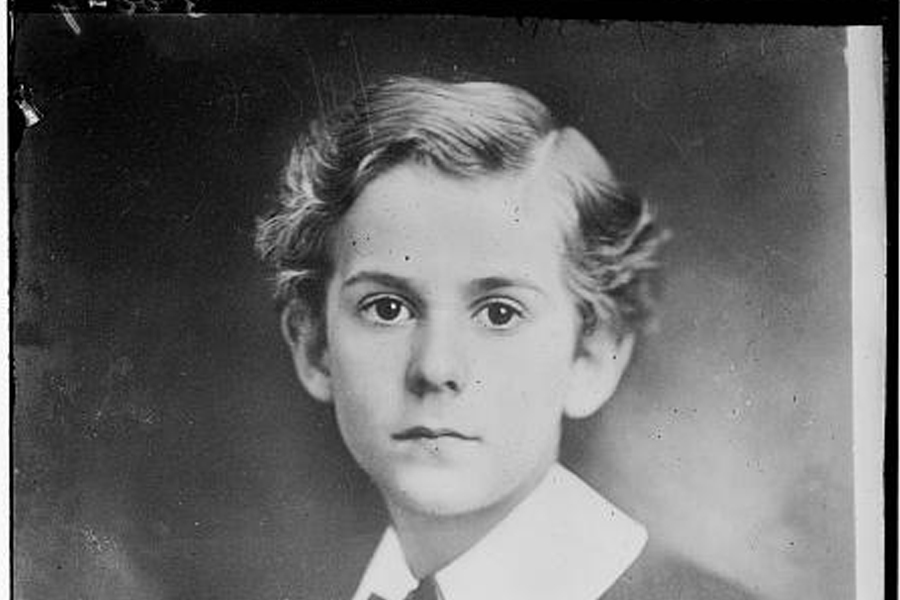
A birth at the edge of empire
I see Prince Ernst Of Hohenberg as a man born in the last bright years of a fading world. He came into life on 27 May 1904 at Konopište, inside a family that stood close to the center of European history and yet was kept just outside the throne. He was the second son of Archduke Franz Ferdinand of Austria and Sophie, Duchess of Hohenberg. That detail matters, because it shaped almost everything that followed.
His birth did not place him in a simple royal line. It placed him in a morganatic branch, a family line where rank, duty, and affection were always in tension. The empire looked grand from the outside, but inside the family there was already a quiet fracture. Ernst grew up beneath that fracture like a tree rooted in rocky ground. Strong, but never sheltered.
When his parents were assassinated in Sarajevo in 1914, Ernst was only a child. The event shook Europe, but for him it was personal catastrophe. His father and mother were gone in an instant, and the children were left to be raised by relatives. From that moment, his life became a long movement through loss, adaptation, and survival.
The Hohenberg family circle
The family around Prince Ernst Of Hohenberg is both noble and deeply human. I find it best understood person by person.
His father was Archduke Franz Ferdinand of Austria, the heir presumptive to the Austro Hungarian throne. He is remembered globally because his death helped trigger the First World War, but in the family story he is also a father cut down before he could shape his children’s adult lives.
His mother was Sophie, Duchess of Hohenberg. She was born Sophie Chotek and came from nobility, though not from the same imperial rank as her husband. Her marriage to Franz Ferdinand was personal devotion made against the grain of court politics. Because of that, she and her children lived inside the shadow of exclusion, even before tragedy struck.
Prince Ernst’s older sister was Princess Sophie of Hohenberg. She was born in 1901 and later married Count Friedrich von Nostitz Rieneck. She remained part of the family’s living memory of the old world, a thread carrying the Hohenberg name into the next generation.
His older brother was Maximilian, Duke of Hohenberg, born in 1902. He became the head of the Hohenberg family and married Countess Elisabeth of Waldburg zu Wolfegg und Waldsee. In many ways, Maximilian carried the family burden most visibly, because he had to represent the line after the parents were killed.
The family also had a stillborn son in 1908. Even though he never lived, his burial at Artstetten places him firmly inside the family history. That detail gives the story weight. This was not only a public dynasty. It was also a household marked by grief before and after Sarajevo.
Ernst’s spouse was Marie Therese Wood, whom he married in Vienna on 25 May 1936. Her background linked British and Austrian noble lines. She was the daughter of Captain George Jervis Wood and Countess Rosa Lónyay de Nagy Lónya et Vásáros Namény. Through her mother, she also connected to the Hohenlohe Bartenstein line. In practical terms, she was the steady companion who entered a family already trained by history to expect pressure.
He had two sons.
His first son was Prince Franz Ferdinand Maximilian Georg Ernst Maria Josef Zacharius Ignaz of Hohenberg, born in 1937. The long name itself feels like a cathedral of memory, each part carrying a piece of family and tradition. He married Heide Zechling and had a son named Prince Franz Ferdinand Karl Georg Ernst von Hohenberg, born in 1969. That grandson continued the line and had a son named Maximilian.
His second son was Prince Ernst Georg Elemer Albert Josef Antonius Peregrinus Rupertus Maria of Hohenberg, born in 1944. He married Patricia Caesar in 1973 and later Margareta Anna Ndisi in 2007. He had one daughter, Eva Anne Maria von Hohenberg, born in 1974, who later married Alessandro Geromella.
That means the family line of Ernst Of Hohenberg moved through sons and granddaughters, through marriage and re marriage, through old names and newer lives. It is a line that survived by refusing to vanish.
Career, work, and political life
Prince Ernst Of Hohenberg was not distinguished through government or military service. His career was quieter, earthier, and potentially more telling. Land, conviction, and endurance shaped my existence.
He worked as a forester after studying in Bruck a der Mur. My understanding of him fits that profession. Not glamorous: forestry. Slow growth requires patience, structure, and concentration. It also suggests a man who valued practical effort over ceremonial titles.
His legitimist activism in the 1930s led him to the Austrian Heimatschutz. He opposed Nazism and advocated Austrian independence. That choice wasn’t pretty. It had effects.
After the Anschluss, the Gestapo seized him in March 1938. Dachau, Flossenbürg, and Sachsenhausen were his destinations. Freed in 1943. His confinement made his life a hard ledger of misery, which the body frequently retains longer than the state.
He resumed forestry and joined the Austrian People’s Party and the politically persecuted Austrians group after the war. That shows he didn’t hide after the camps. He returned to public life, likely with unhealed wounds.
Property, finance, and what inheritance really meant
Prince Ernst Of Hohenberg’s finances are not modern goldmines. I see inheritance, confiscation, restoration, and loss. His family had significant properties such as Artstetten Castle, Konopište, Chlumetz, and Greifenberg. Those properties were divided and reformed after the empire fell. A few properties were seized. Some were later restored. Family wealth was more like a river diverted by history than a bank account.
The Hohenbergs were never ordinary rich. They managed a wrecked estate. Land, titles, and fluctuating borders determined their finances. Every government change affected them. Their money was never simple. Memory was taxed.
A life measured by dates
I often find Ernst’s life easiest to grasp through a timeline.
27 May 1904, born at Konopište.
1914, his parents were assassinated in Sarajevo.
1918, the family’s Czechoslovak properties were confiscated.
1936, he married Marie Therese Wood in Vienna.
1937, his first son was born.
March 1938, he was arrested by the Gestapo.
1943, he was released from Sachsenhausen.
1944, his second son was born.
1945, the family’s properties were restored and he received the Order of the Golden Fleece.
1954, he died in Graz and was buried in the Hohenberg crypt at Artstetten.
These dates do more than mark time. They trace the shape of a century that was breaking and rebuilding itself around him.
FAQ
Who was Prince Ernst Of Hohenberg?
He was the second son of Archduke Franz Ferdinand and Sophie, Duchess of Hohenberg. He belonged to the Hohenberg line, a noble family tied to the last years of the Austro Hungarian world.
Who were his closest family members?
His parents were Franz Ferdinand and Sophie. His siblings were Princess Sophie of Hohenberg and Maximilian, Duke of Hohenberg. He married Marie Therese Wood and had two sons, Franz Ferdinand and Ernst Georg. His known grandchildren include Prince Franz Ferdinand Karl Georg Ernst von Hohenberg and Eva Anne Maria von Hohenberg.
What did he do for a living?
He worked in forestry. That was his main profession, both before and after the war.
Was he politically active?
Yes. He supported Austrian independence, joined legitimist and nationalist circles in Austria, and opposed National Socialism. That opposition led to his arrest and imprisonment.
What is he remembered for?
I remember him as a man who carried a shattered imperial inheritance through war, dictatorship, and loss without surrendering his identity. He was a forester, a political prisoner, a husband, a father, and a survivor.