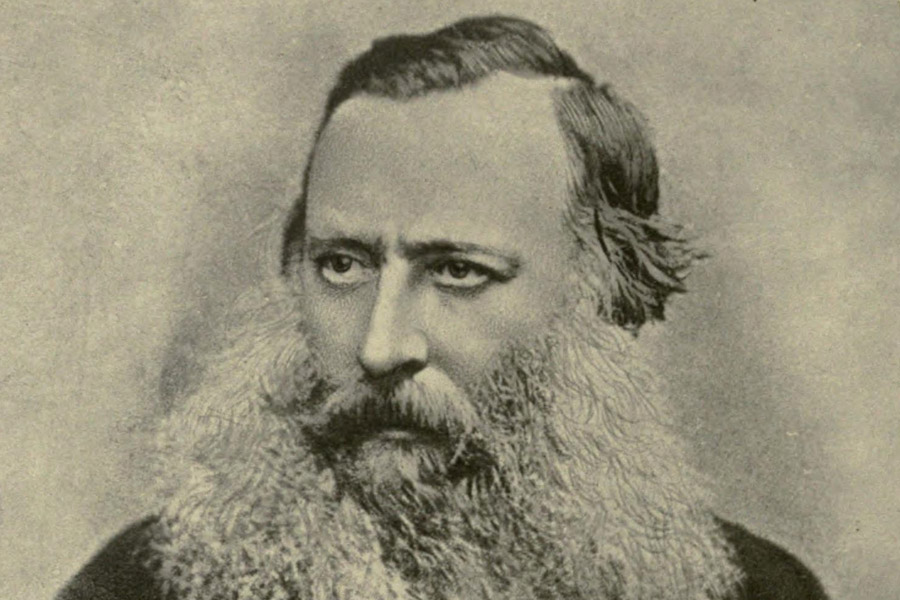
A man behind a famous family
When I look at William Edward Blythe, I do not see a headline-grabbing celebrity. I see something rarer: a quiet origin point. He stands in the background of one of the most famous acting families in American history, yet his life helped set the stage for a dynasty that would later shine under theater lights, film cameras, and public fascination.
William Edward Blythe was a British surveyor tied to the East India Company, a man associated with colonial India and later with London. His exact birth year is not fully settled in the available family record, with 1818 and 1823 both appearing in different accounts. What is more stable is the shape of his life: he was born in India, married there in 1839, fathered seven children, and died in 1873. He was not the star of the story, but he was one of its load bearing beams.
His name matters because it belongs to the root system of the Barrymore family. From him came Herbert Arthur Chamberlayne Blythe, later known as Maurice Barrymore, and from Maurice came Lionel Barrymore, Ethel Barrymore, and John Barrymore. Through them, the family became a kind of living inheritance, passed down like a bright lantern from one generation to the next.
Early life and work in India
William Edward Blythe’s life began in the world of British India, where careers, appointments, and family lines often crossed oceans. He is described as a surveyor for the British East India Company, which means he worked in a field that demanded precision, patience, and a steady eye for land and measurement. Surveying was no ornamental occupation. It was practical, technical, and deeply connected to imperial administration.
I imagine the work as a map being drawn one measured line at a time. A surveyor helped turn landscape into order, and order into power. That kind of role suggests discipline and status, even if the details of his daily assignments are not widely preserved. He likely moved through a world of records, routes, and official obligations, more clerk and technician than romantic hero.
Family history places him in Calcutta or Kolkata, and his later life in or near London. That geographic arc, from India to England, reflects the movement of many colonial-era families. It also explains why his descendants would later feel at home in both inherited respectability and public performance. One branch of the family leaned toward service and structure. Another would lean toward stagecraft, applause, and reinvention.
Marriage and family life
William Edward Blythe married Charlotte Matilda Chamberlayne in Ghazipur in 1839. Their marriage was not merely a private union. It became the starting point of an entire family line that would later enter American cultural history.
Charlotte Matilda Chamberlayne was a central figure in this story. She was the wife, mother, and emotional center of the early household. Family accounts say she died in 1849, shortly after giving birth, which left the children to grow up in a fractured family structure. That loss shaped everything that followed. A family is often like a tree after a storm. The trunk remains, but the branches bend in different directions.
William and Charlotte had seven children. Three died in infancy, which was tragically common in the 19th century and yet no less devastating for the people living through it. The surviving children included Emily Louisa Blyth, William Henry Blyth, often called Will, Evelin or Evelyn Agnes Blyth, and Herbert Arthur Chamberlayne Blythe, who became Maurice Barrymore. There were also three infant children whose names do not always survive in the accessible record.
Family overview
| Family member | Relationship to William Edward Blythe | Notes |
|---|---|---|
| Charlotte Matilda Chamberlayne | Wife | Married in 1839, died in 1849 |
| Herbert Arthur Chamberlayne Blythe, Maurice Barrymore | Son | The most famous child, later stage actor |
| William Henry Blyth, Will | Son | Older brother of Maurice |
| Emily Louisa Blyth | Daughter | Later appears in married family records |
| Evelin or Evelyn Agnes Blyth | Daughter | Name appears with spelling variation |
| Three infant children | Children | Died young |
The children and their place in the family story
Herbert Arthur Chamberlayne Blythe is the child whose shadow stretches farthest into public memory. He later took the name Maurice Barrymore, a deliberate change that helped separate his stage life from the expectations attached to the Blythe name. That choice alone tells me something important about William Edward Blythe. He was a father from an older, more rigid world, and his son stepped into a new one.
Maurice Barrymore became the bridge between the Blythe family and the Barrymore dynasty. He studied at Harrow and Oxford, boxed, and ultimately entered acting. The family story often frames his move to the theater as a rebellion against respectability, or at least against the narrow path his father may have envisioned. I find that tension fascinating. It gives the family line a dramatic pulse.
William Henry Blyth, known as Will, appears as an older sibling to Maurice. He is less famous, but he matters because family history is never only about the most visible figure. Siblings form a kind of human weather system around one another. They influence tone, memory, and pressure. Will belongs to the family’s foundation, even if the stage lights never found him.
Emily Louisa Blyth and Evelin or Evelyn Agnes Blyth are daughters whose names surface in genealogical records. Their lives are less publicly documented, but they remain essential to the family picture. In families like this, the daughters often disappear behind famous sons unless one looks carefully. I do not want to do that here. They were part of the household, part of the grief, part of the continuity.
The three infant children matter as well, even in their briefness. Their lives were short, but their existence reminds me how fragile 19th century family life could be. Seven children did not guarantee seven survivals. Every birth carried hope and risk together.
Legacy through Maurice Barrymore and beyond
William Edward Blythe’s greatest legacy is Maurice Barrymore. Maurice’s theater career changed the family. It was no longer colonial India’s administrative or respectable domestic domain. The public noticed it.
After marrying Georgiana Drew, Maurice created another successful theatrical brand. Their children—Lionel, Ethel, and John Barrymore—became American acting legends. Later generations included Drew Barrymore, so William Edward Blythe is the distant ancestor of modern celebrity culture.
Quite wonderful. Actors whose life were measured in reviews, applause, and public recall descended from a surveyor who surveyed land in colonial India. Nearly poetic contrast. Named numbers. Map lines become poster lines.
Personality, wealth, and reputation
Some aspects of William Edward Blythe’s personality are discernible in the preserved material. He appeared to be well-educated and professional. East India Company surveyors were busy. He probably liked order, decorum, and progress.
He also may have expected more traditional success from his son. In his world, that makes sense. A parent in his position may have thought of law, administration, or some respectable field, not theater. Thus, Maurice Barrymore’s career was not optional. Pivot, almost break in family gravitation.
His fortune was sufficient to enable education and family travel between India and England, according to later family discussions. I can’t give exact numbers, but the family trajectory suggests finances, contacts, and social ambition.
Timeline of William Edward Blythe
William Edward Blythe was born in the early 19th century, likely in 1818 or 1823.
In 1839, he married Charlotte Matilda Chamberlayne in Ghazipur.
During the 1840s, the couple had seven children, including Maurice Barrymore, though three died in infancy.
In 1849, Charlotte died after childbirth, leaving William to continue with the surviving children.
In the 1870s, Maurice moved into adult life, chose acting, and adopted the stage name Maurice Barrymore.
In 1873, William Edward Blythe died in London.
After his death, the family line grew more famous, not less, as Maurice and then the Barrymore children rose in public life.
FAQ
Who was William Edward Blythe?
William Edward Blythe was a British East India Company surveyor and the father of Maurice Barrymore, who became the founder of the Barrymore acting family.
Why is William Edward Blythe important?
He matters because he is the ancestral link between an older colonial era family line and one of the most famous acting dynasties in entertainment history.
Who was William Edward Blythe’s wife?
His wife was Charlotte Matilda Chamberlayne. Their marriage in 1839 began the family line that later produced Maurice Barrymore and the Barrymores.
How many children did William Edward Blythe have?
He had seven children. Three died in infancy, while the surviving children included Maurice Barrymore, Will Blyth, Emily Louisa Blyth, and Evelin or Evelyn Agnes Blyth.
Was William Edward Blythe connected to the Barrymore family?
Yes. He was the father of Maurice Barrymore, and through Maurice he became the ancestor of Lionel Barrymore, Ethel Barrymore, John Barrymore, and later Drew Barrymore.
Did William Edward Blythe work in finance?
There is no strong evidence of a banking or investment career. His known profession was surveyor, and the available material suggests he had enough means to support a family with education and social standing.
Why does his name appear in different forms?
The family record includes spelling variation, especially Blythe and Blyth. That kind of variation was common in older records and genealogies, so the name may appear differently depending on the source or branch of the family line.