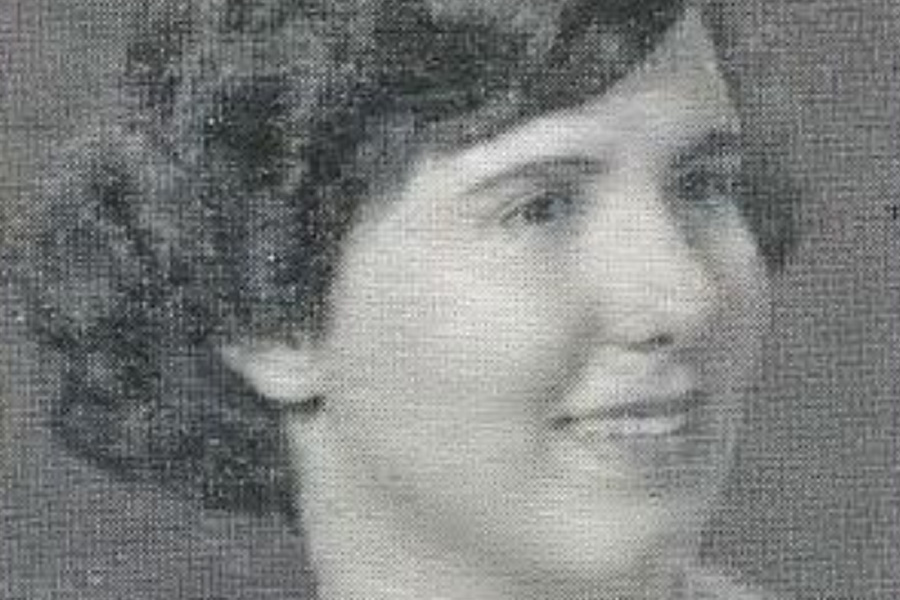
Virginia Zamperini and the Family She Came From
I think of Virginia Zamperini as a person standing just outside the bright circle of public fame, close enough to feel its heat, but living in a quieter light of her own. She was born on 19 September 1923 in California and died on 29 July 2008 in Jefferson County, Colorado. Her life is not the kind that fills newspaper columns or business ledgers. It is a life traced more often through family records, memorial notes, and the long shadow of one of America’s most famous survival stories.
Virginia belonged to the Zamperini family of Anthony and Louise, a household shaped by Italian roots, American hard work, and the pressure of raising several children in the early decades of the twentieth century. Her family line connects to one of the best known names in wartime and athletic history, Louis Zamperini, yet Virginia herself remained more private. That is part of what makes her interesting to me. She was near the center of a famous family, but she did not turn herself into a public brand. She seems to have lived like a steady flame behind a curtain, warm but not loudly visible.
The Parents: Anthony and Louise
Virginia’s father was Anthony Zamperini, also known as Antonio Zamperini. He was born in Italy in 1889 and later built a life in California. Records describe him as working as an electrician and later as an air brake mechanic for the railway. That detail matters because it gives the family shape. It tells me this was not a decorative household. It was a working household, built on labor, adjustment, and endurance.
Her mother was Louise Dossi Zamperini, born in Pennsylvania in 1898. Louise died in Los Angeles in 1993. She appears in family history as the center of the home, the person around whom the children’s early lives revolved. Anthony and Louise gave their children both roots and movement. They carried old world memory into a new American setting, and Virginia grew up inside that blend.
I picture the family not as a polished portrait, but as a living room full of motion, voices, obligations, and affection. The family story has weight, but it also has rhythm. That rhythm began with Anthony and Louise.
Virginia’s Siblings and the Shape of the Household
Virginia was the youngest of the known Zamperini children. Her siblings were Pete, Louis, and Sylvia. Each one seems to have carried a different branch of the family story.
| Family Member | Relationship to Virginia | Notes |
|---|---|---|
| Anthony Zamperini | Father | Italian born, worked in California |
| Louise Dossi Zamperini | Mother | Born in Pennsylvania, family anchor |
| Pete Zamperini | Brother | Coach and Navy veteran |
| Louis Zamperini | Brother | Olympic runner, WWII bombardier, POW survivor, later author and speaker |
| Sylvia Zamperini | Sister | Married surname Flammer in later records |
| Howard Gordon Flye | Husband | Married Virginia in 1948 |
Pete Zamperini was the older brother known for coaching and military service. He spent years shaping young athletes, and that makes him feel like one of the family’s builders. Louis Zamperini became the most famous member of the family, known first as an Olympic runner and later as a war survivor and public figure. Sylvia Zamperini, later Sylvia Flammer, is another important sibling in the family record. She helps complete the picture of Virginia’s childhood world, a world with brothers and sisters who each took a different road.
I find Virginia’s place in this structure meaningful. She was not the headline sibling. She was the younger sister who stood inside the family circle while the others moved into more visible roles. That can create a different kind of strength. It can teach observation, patience, and loyalty.
Marriage, Home Life, and Personal Identity
Virginia married Howard Gordon Flye in Los Angeles on September 19, 1948. That date defines her adulthood. It portrays her transition from daughter to wife and from her family to her own.
Virginia’s subsequent life is shaped by Howard Gordon Flye, a lesser-known figure. They link to Fort Logan National Cemetery monument records and burial information. I found no public professional profile for Virginia, but that suggests a military or veteran life nearby.
Lack of presence speaks something too. Not every life is best defined by titles or salaries. Some lives are measured by loyalty, continuity, and relationships. The story of Virginia reminds me of that. It’s about family, marriage, and fitting into history without being swept up.
Career, Money, and Public Work
I found no clear public career record for Virginia Zamperini in the material available. That does not mean she had no work. It means her work was not widely recorded in the public-facing sources that usually capture employment histories or financial achievements. She does not appear as a business founder, public official, performer, or major executive in the material I reviewed.
What does stand out is how often she is remembered through family context rather than occupation. That is a different kind of biography. It reminds me that many people leave behind their most important work in places that records do not easily measure. A household can be a kind of architecture. A marriage can be a form of craftsmanship. A family bond can be a lifelong labor.
Virginia and Louis Zamperini
Virginia’s relationship with Louis Zamperini is crucial. Louis’ Olympic running, military duty, prisoner of war escape, and later life as a speaker and religion figure made him famous. As his sister, Virginia helped form him before the world knew his name.
I imagine the Zamperini family as a tree with strong branches reaching different skies. Louis had the most public notoriety, but the family roots ran deep. Some roots were in Virginia. Her presence enhances Louis’s image as a brother, son, and family member.
She was aunt of Louis’s children Cissy and Luke Zamperini. That matters because family history is generally about continuity, not glory. Aunts, uncles, siblings, and spouses pass on memories. That chain included Virginia.
A Timeline of Virginia Zamperini’s Life
1923, born in California.
1930s, raised in the Zamperini family home with Pete, Louis, and Sylvia.
1940s, adulthood begins as her brothers become increasingly visible in public life.
1946, she appears in family imagery connected to the postwar return of Louis.
1948, marries Howard Gordon Flye in Los Angeles.
2005, Howard Gordon Flye dies.
2008, Virginia dies in Jefferson County, Colorado.
That timeline is short, but it is not thin. It has the structure of a bridge. It spans a life that was private but connected, modest in public detail but rich in family significance.
FAQ
Who was Virginia Zamperini?
Virginia Zamperini was the youngest known sister of Louis Zamperini and a daughter of Anthony Zamperini and Louise Dossi Zamperini. She was born on 19 September 1923 and died on 29 July 2008.
Who were Virginia Zamperini’s family members?
Her parents were Anthony Zamperini and Louise Dossi Zamperini. Her siblings were Pete Zamperini, Louis Zamperini, and Sylvia Zamperini. Her husband was Howard Gordon Flye.
Did Virginia Zamperini have a public career?
I did not find a clear public career record for her. The available material centers on her family life, marriage, and place within the Zamperini family history.
Why is Virginia Zamperini important?
She matters because she helps complete the family story behind Louis Zamperini. She represents the quieter side of a famous family, where memory is carried through kinship rather than headlines.
Was Virginia Zamperini related to Louis Zamperini’s children?
Yes. She was their aunt through her relationship as Louis’s sister.