Early life and the quiet of making images
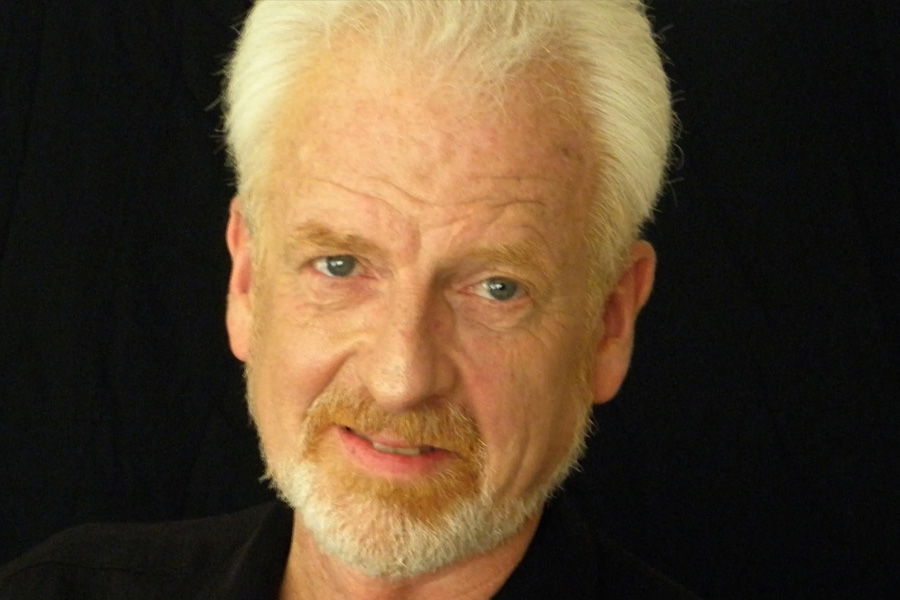
I followed the scattered vestiges of a life that moves between photos and words, the darkroom and literature. Born in the early 1940s, lenses and books formed his midcentury sensibility. The outline isn’t theatrical. A small studio with floor light and notes on a table. In the late 1960s, he began creating works for galleries and print. He learned to listen to the city and its people.
A ritual-like practice exists here. He places the camera like a hand on the world, counts exposure beats, writes a line or two of fragmentary text, and matches them. The pairing reminds me of a little table where two diverse objects complement each other. One is the photo. The line is one. They debate presence.
Family and intimate ties: Eileen Brennan
I imagine the domestic scene in the late 1960s and early 1970s. He and she shared a room that contained a radio, a camera, and sometimes a script. They married around 1968. Those years folded into one another fast. The marriage produced two sons and then, as often happens with lives that pull in different directions, it ended in the early 1970s. For him the separation was another kind of photographic aperture: it altered what came into view and what receded to the margins.
Eileen’s life as an actress had its own trajectory, and his life as an image maker ran parallel rather than identical. They remained parents. In private photographs she appears with their boys, and the pictures keep the ordinary evidence of caregiving: small hands, a tired smile, a jacket left on a chair. Those traces are the kind of material that softens a biography and gives it weight.
Children: Patrick Brennan and Samuel John Lampson
The sons carry different names in public life. One son took his mother’s professional surname; he went on to work in film and television. He became an actor with roles spanning television series and feature projects. The other son kept the family name and has been described in public memory as a musician and as someone who lived largely out of the spotlight.
I find it striking how family roles imprint themselves on later choices. One son chose the stage and the camera in a public way. The other preferred other forms of expression. They are both measurable in dates and in credits, but they are also measurable in the small, private ways that make a family: a shared meal, a childhood scrape, a moment captured on film and then stored in a drawer.
Career and achievements: the maker at work
Several numbers stand out in his artistic life. In the mid-1970s, he exhibited solo in a prominent modern photography gallery. The show aired January and February 1977. That alone makes it evident. Artists argue to communities through exhibitions. A solo display asserts a cohesive body of work.
In the 1970s, he published photos in publications and worked on short documentaries and cinematography. He handled both still and moving images well. He worked on commissions, editorial pages, and a few productions as a photo director. He shot portraits and documentaries in Europe and Los Angeles.
He combined visual and word. That composite shape rebels against artistic categories. Photo and prose poem pairings assert that light and words can triangulate reality better than either alone. I always liked that stubborn, mixed sensibility.
Timeline of key dates and events
| Year or Period | Event |
|---|---|
| 1940s | Birth, early life in Britain, formative years with camera |
| 1968 | Marriage to an actress; household begins |
| Early 1970s | Births of two sons, family life in transition |
| 1971 to 1975 | Documentary and photography work across Europe and the US |
| Jan to Feb 1977 | Solo photographic exhibition in New York |
| 1978 | Photographic project adapted into a syndicated program concept |
| 2013 | Family mentions in public remembrances following the passing of a spouse |
The table reads like a map. Each date is a waypoint. They do not exhaust the life. They orient it.
Recent mentions and online presence
I detect a gradual shift from public to private life. Press mentions of him center on family remembrances and human documents that link public figures to private lives. His social media participation varies. He lives on in archival prints, catalogues, and the recollections those who kept his photos in albums. Lack of public exhibition is a presence. It leaves a work index in peaceful settings.
FAQ
Who is David John Lampson?
I see him as a photographer and a poet, a maker who worked in both still and moving image forms. He produced photographs that were exhibited and placed in magazines in the 1970s. He worked on documentary sequences and in cinematography roles. He lived a life that crossed cities and media, always returning to the basic act of witnessing.
Who were his family members?
He was married in 1968 and had two sons with his spouse. The marriage ended in the early 1970s. The family maintained ties through photographs and shared experiences. One son became an actor and works in film and television. The other son chose a quieter path in public terms.
What were his most visible professional achievements?
A solo exhibition in January and February of 1977, publication placements in photographic periodicals during the 1970s, and work as a director of photography for documentary projects stand out as concrete achievements. He also paired prose poems with photographic series, creating cross disciplinary work.
Where can I see his work?
You can look for prints from the 1970s in specialized photographic archives, gallery catalogues from that era, and in periodical issues that published his images. Many of the prints exist in collections and in private hands. If you want precise locations, archival searches with exhibition dates and publication years is the practical route.
Are there surviving interviews or personal writings?
There are short prose pieces that accompany photographs, and a few interviews and notes appear intermittently where exhibitions or magazine pieces were produced. The textual fragments that survive show a voice that prefers concise, image-driven lines.